Ammonia (NH₃)
Released as proteins in feed and faeces break down in the sediment.
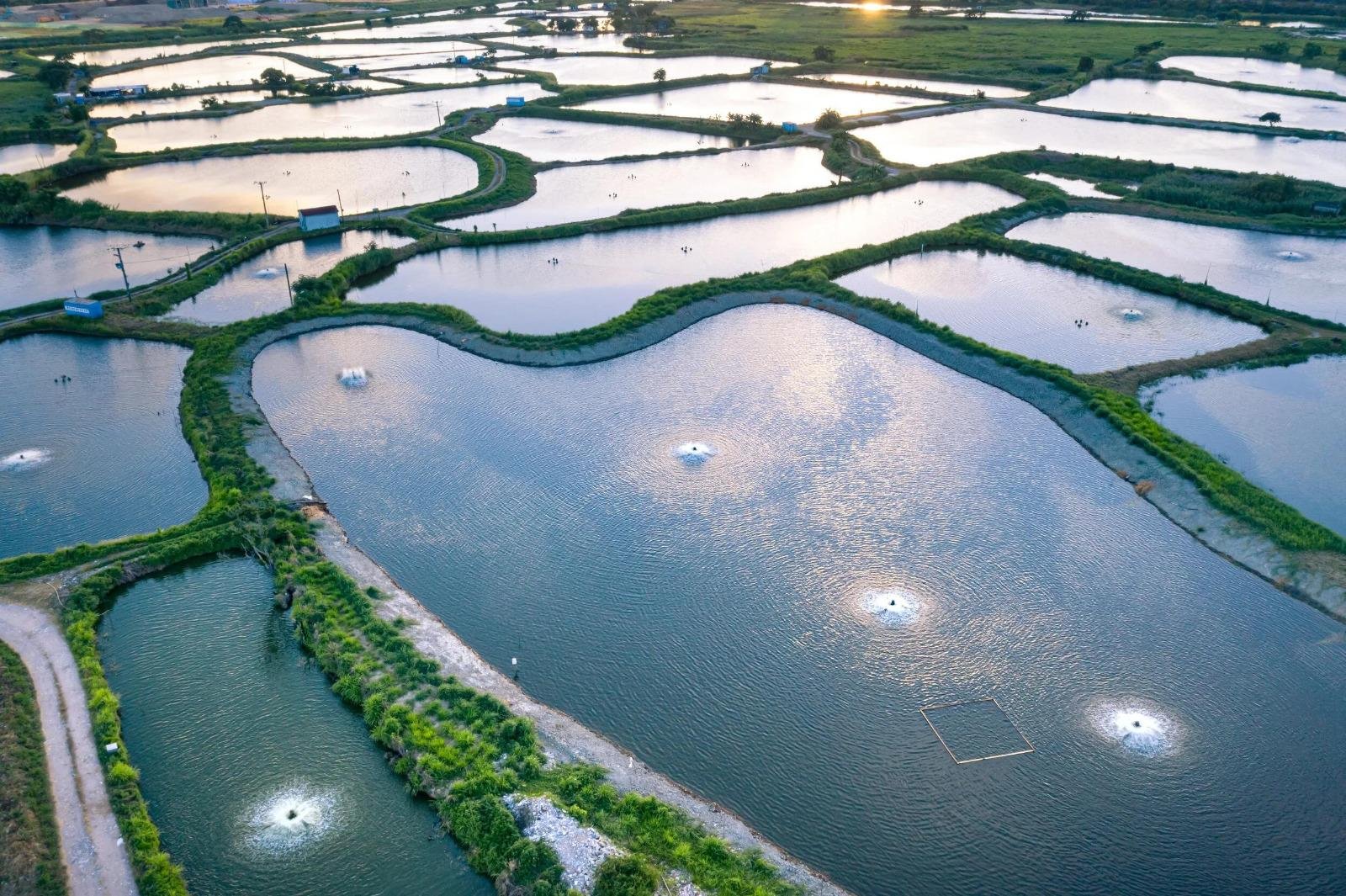
Most pond problems start at the bottom. Our targeted consortia manage organic load, eliminate toxic gases, and maintain water stability throughout the culture cycle.
of the phosphorus added to a vannamei pond settles into the sediment.
Global pond aquaculture studiesbelow the sediment surface, water usually holds no oxygen at all.
Sediment profile analysisis the safe limit for hydrogen sulphide in brackish-water ponds. At 50–500 µg/L, half of exposed marine animals can die within 96 hours.
Aquaculture water quality standardsUneaten feed, faeces and dead plankton settle on the bottom every day. Just below the surface of that sludge there is no oxygen, and microbes break it down anaerobically. The by-products seep up into the water where the shrimp live.
HOW TOXINS FORM
Released as proteins in feed and faeces break down in the sediment.
Accumulates when low oxygen at the bottom stops nitrification halfway.
Produced by sulphate-reducing bacteria such as Desulfovibrio in oxygen-free sediment.
All three diffuse into the water column, where they stress shrimp, suppress feeding and weaken immunity.
WHAT BIOLOGY DOES
Anaerobic and facultative probiotics working together
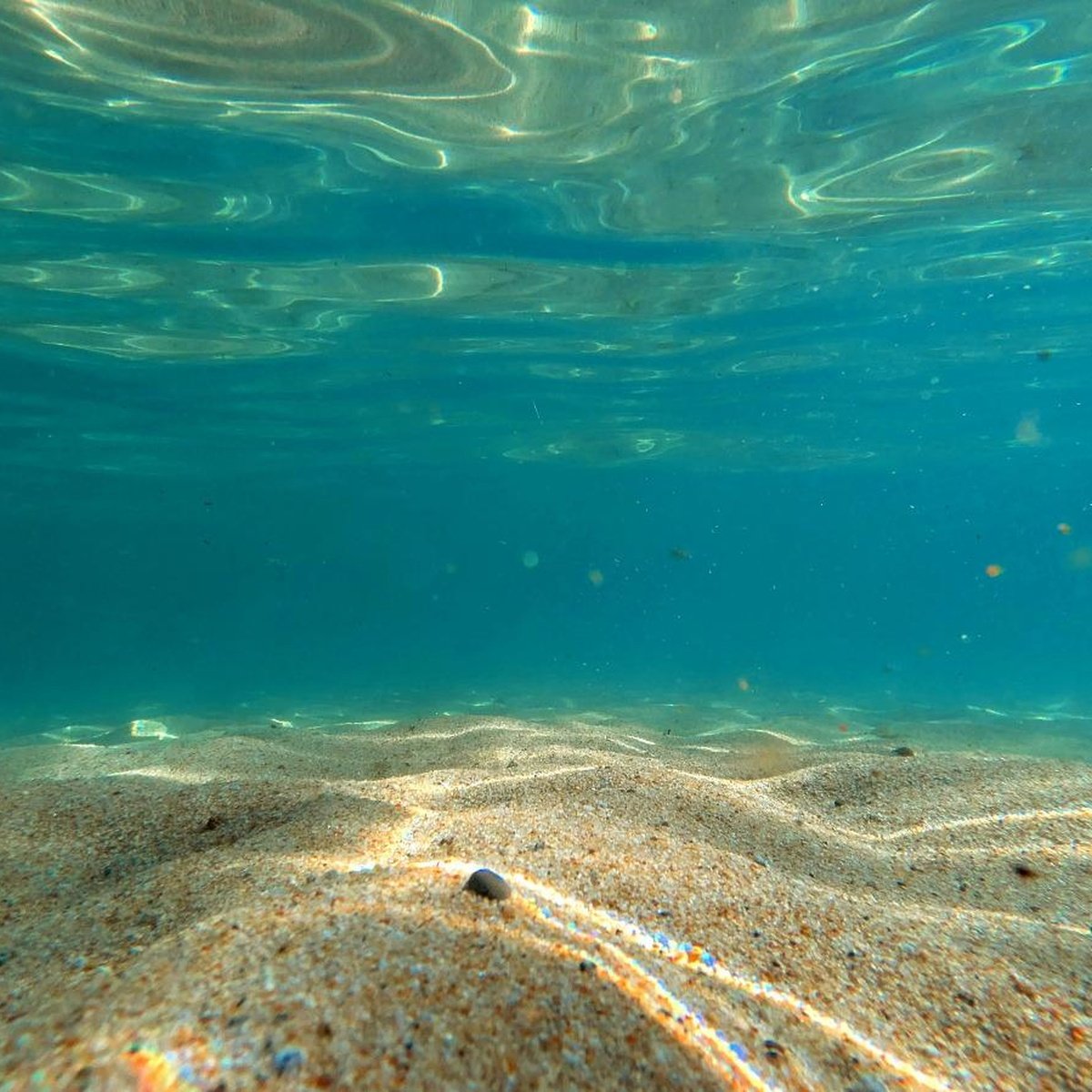
Surface-water probiotics cannot reach the sediment, where the problem starts. Anaerobic and facultative bacteria can, and they work as a consortium.
Hydrolytic bacteria break down sludge, leaving less fuel for H₂S producers.
Denitrifying bacteria convert nitrate and nitrite to harmless N₂, which leaves the pond for good.
Sulphide-oxidising and photosynthetic bacteria convert H₂S before it reaches the water.
A lighter organic load uses less oxygen, helping keep the thin top layer of sediment oxidised.
ABOVE THE BOTTOM
Keeping the water column stable.
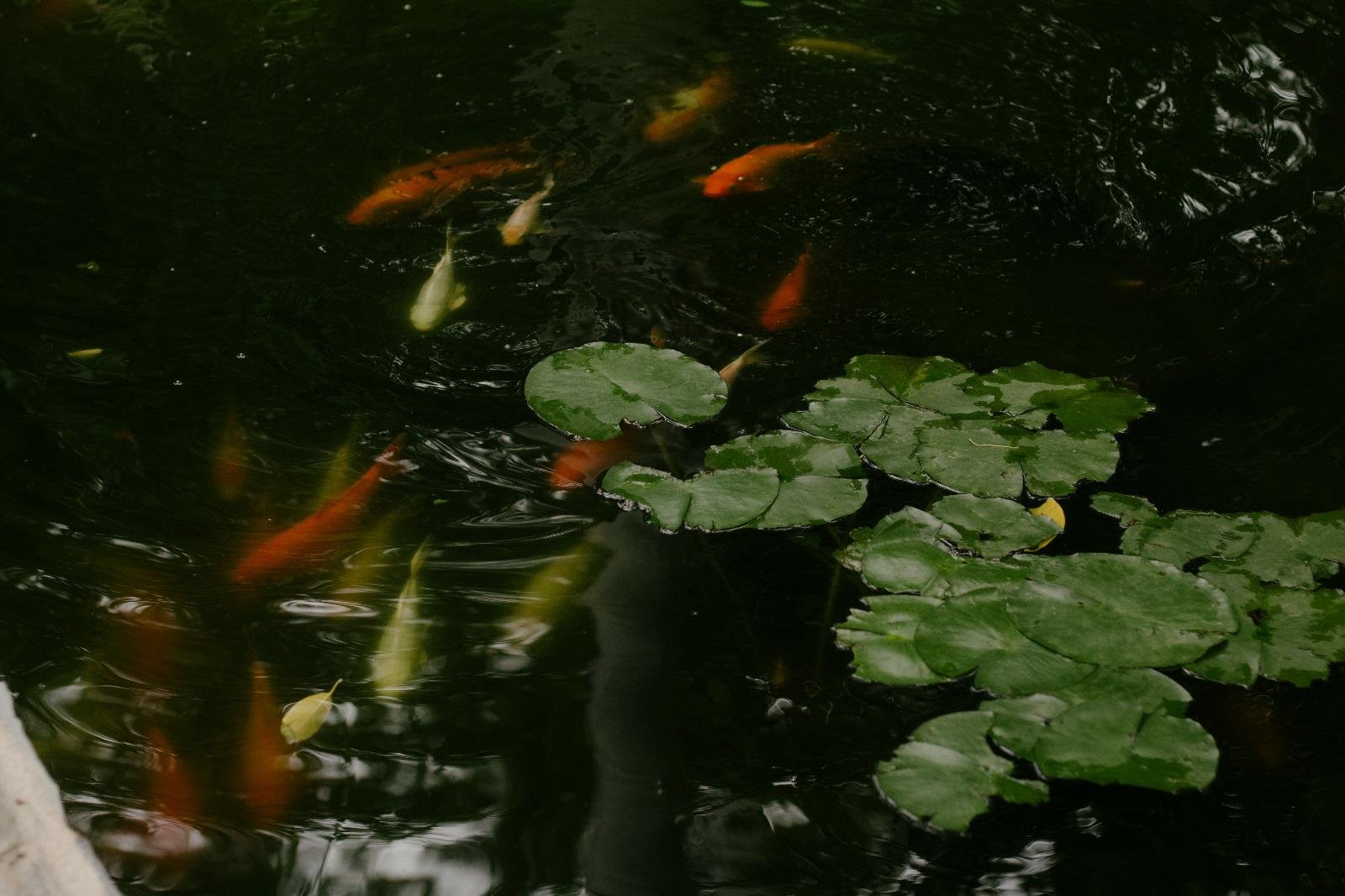
Nitrifying bacteria near aerators convert ammonia to nitrate, keeping dissolved oxygen and plankton stable.
Facultative and photosynthetic bacteria maintain water stability and prevent toxic peaks during night-time oxygen drops.
Shrimp absorb minerals directly from water through gills and exoskeleton. In low-salinity ponds, essential minerals like potassium, magnesium and calcium become limiting factors for growth and moulting.
Chelated minerals improve bioavailability, allowing shrimp to maintain ion balance and complete successful moults even in freshwater conditions.
01
Phosphorus
Supports energy metabolism and skeletal development. Chelation prevents precipitation in alkaline water.
02
Potassium + magnesium
Maintain osmotic balance. Critical for successful moulting in low-salinity conditions.
03
Calcium
Essential for exoskeleton formation. Chelated calcium improves absorption during intermoult periods.
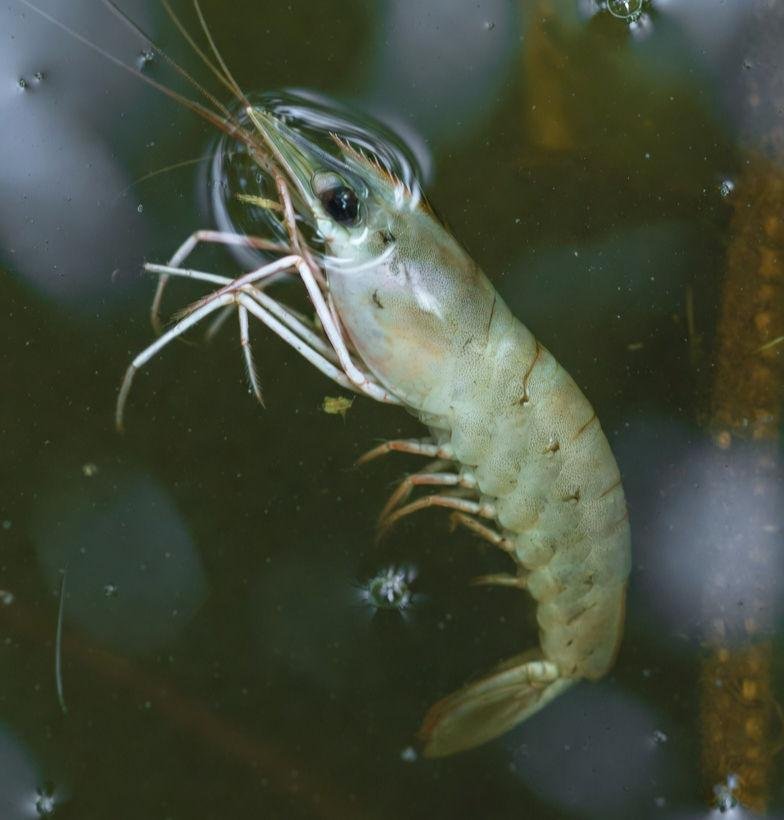
LOW-SALINITY SURVIVAL
Survival rate
Without minerals
With minerals