

BIOFACTOR BIOLOGICALS
Biofactor nutrients animation background
PLANT NUTRITION · BIOLOGICAL MOBILISATION

BIOLOGY THATMOVES NUTRIENTS

Converting unavailable soil reserves into active plant nutrition through living microbial pathways.

CHEMICAL INPUTS

“Adding synthetic chemicals often results in 70% fixation or runoff.”

BIOLOGICAL MOBILISATION

“Microbial inoculants unlock existing soil reserves into active plant-available nutrition.”

NITROGEN

From the atmosphere to biology.

NNITROGEN · ATOMIC NO. 7
EARTH'S ATMOSPHERE BY VOLUMEN₂
~78%
is nitrogen. Plants cannot use atmospheric N₂ directly.

The atmosphere contains approximately 78% nitrogen. Yet plants cannot use atmospheric N₂ directly. Nitrogen-fixing microorganisms convert that inert atmospheric nitrogen into biologically useful forms.

Under suitable symbiotic conditions, legumes can fix more than 250 kg N per hectare in a growing season. In other systems, biological nitrogen fixation is lower and depends on the microorganism, crop, soil and environment.

GLOBAL FIXATION50–70 Tg N fixed biologically in agricultural systems every year, worldwide.
FIXATION CAPACITYUp to 311 kg N/ha reported for faba bean; up to 389 kg N/ha for red clover.
BIOLOGICAL PRINCIPLE

"Biology does not invent nitrogen. It opens a pathway to the largest nitrogen reservoir on Earth."

Phosphorus is abundant in many soils. Most of it, however, remains locked in insoluble mineral or chemically bound forms that plants cannot readily access.

Phosphate-solubilising microorganisms release organic acids, chelating compounds and other metabolites that help convert these forms into more plant-available phosphorus.

ORGANIC ACIDSGluconic, citric & oxalic acids release bound phosphate from calcium and iron complexes.
P-USE EFFICIENCY+7.5 kg yield / kg P average gain with biofertilisers across field trials worldwide.
BIOLOGICAL PRINCIPLE

"The real question is not simply how much phosphorus is added. It is: how much of the phosphorus already present can biology make accessible?"

PHOSPHORUS

From locked-up to available.

PPHOSPHORUS · ATOMIC NO. 15
APPLIED FERTILISER P USED BY THE CROPSEASON 1
10–25%
The rest is rapidly fixed in the soil.

POTASSIUM

From mineral reserves to plant availability.

KPOTASSIUM · ATOMIC NO. 19
TOTAL SOIL K HELD IN MINERAL FORMSFELDSPAR · MICA
90–98%
of the total K in most soils is not readily available to plants.

Soils can contain enormous quantities of potassium. Only a small fraction is immediately available to plants.

Potassium-solubilising microorganisms release potassium from mineral sources through organic-acid production and biological weathering.

DIRECT RECOVERYOnly 2–10% of soil K is in water-soluble & exchangeable forms roots can take up directly.
WEATHERING MECHANISMAcidolysis & chelation break silicate lattices to release soluble potassium ions.
BIOLOGICAL PRINCIPLE

"Again, the opportunity is not simply to add more potassium. It is to unlock more of what already exists."
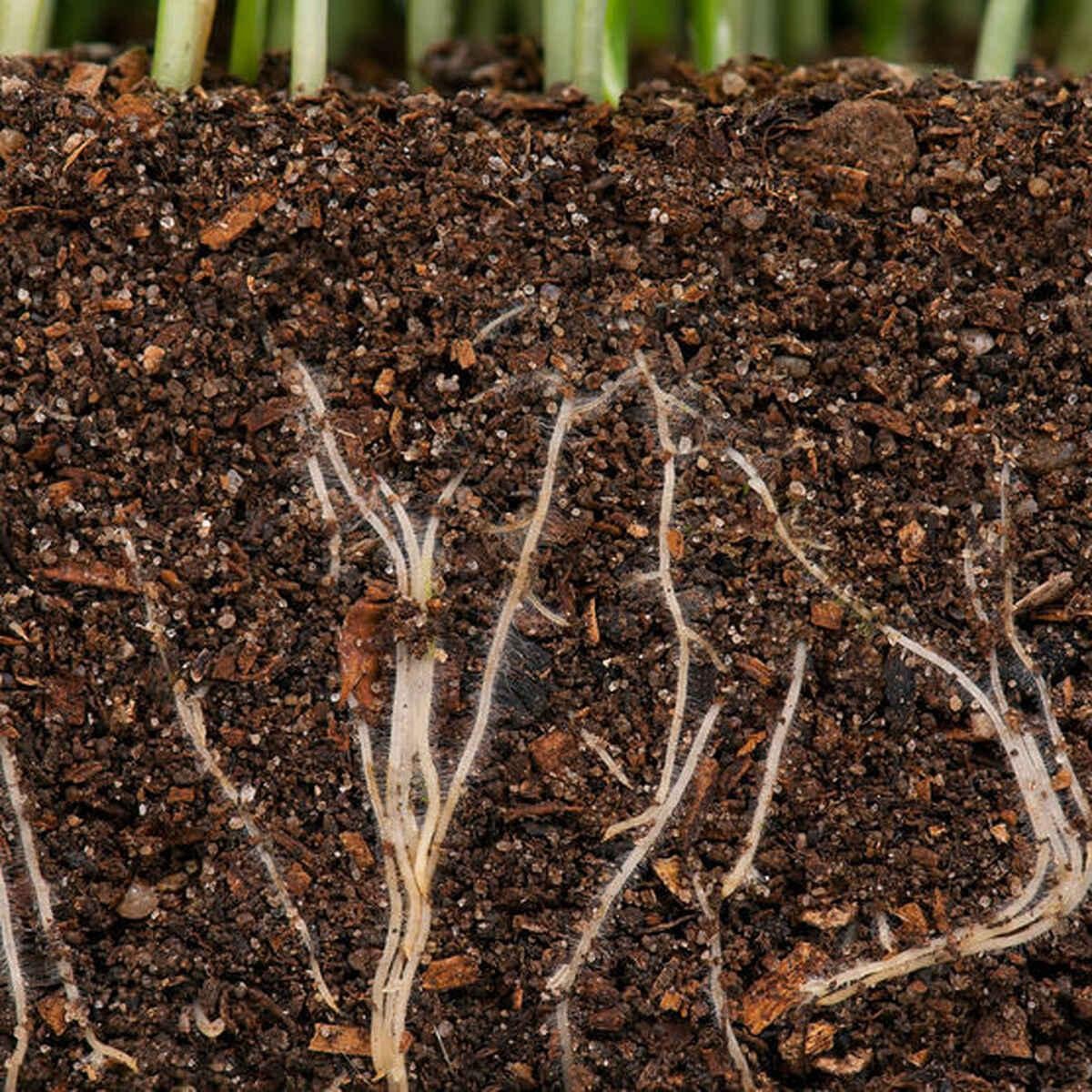
SECONDARY & MICRONUTRIENTS (Ca · Mg · S · Fe · Zn · B)

BIOLOGICAL MOBILISATION OF TRACE ELEMENTS

Secondary nutrients like calcium, magnesium, and sulphur, alongside trace micronutrients such as zinc, iron, manganese, and boron are needed in smaller amounts, but a crop cannot replace one with another. When one runs short, yield and grain quality fall with it.

Like P and K, these nutrients are often present in the soil but held in organic matter, carbonates, silicates or insoluble oxides. Microbes loosen them in three main ways:

  • They release organic acids that dissolve insoluble soil minerals.
  • They produce chelators such as siderophores that keep trace metals soluble and plant-accessible.
  • They make enzymes that free bound nutrients from soil organic matter.
Secondary and Micronutrients Biological Mobilisation

HOW MUCH OF THE WORLD'S FARMLAND IS SHORT

Share of agricultural soils deficient, from FAO's global soil study across 30 countries.

Zn (Zinc)49% short
B (Boron)31% short
Mo (Molybdenum)15% short
Cu (Copper)14% short
Mn (Manganese)10% short
Fe (Iron)3% short

Scale 0–100%. Sillanpää (FAO, 1990), cited in Graham 2008.

Regional surveys can run higher: in India, 242,827 recent samples showed 58.6% of soils short of sulphur and 49% short of zinc.

SSECONDARY

Released from organic matter

Soil bacteria and fungi use sulphatase enzymes to free sulphate from organic compounds. Sulphur-oxidising bacteria convert elemental sulphur into sulphate that roots can take up.

>95% of soil sulphur is in organic form, locked away from roots until microbes release it.
Ca · MgSECONDARY

Dissolved from carbonates

Calcite-dissolving bacteria lower pH with organic acids, and some Bacillus strains produce carbonic anhydrase. Organic acid anions then chelate calcium and magnesium into soluble forms.

Most relevant in calcareous, alkaline soils, where Ca is abundant but tied up as CaCO₃.
ZnMICRO

Solubilised and moved into grain

Zinc-solubilising bacteria release gluconic acid and chelators that dissolve insoluble zinc compounds. Mycorrhizal fungi extend the root's reach for zinc.

+23% grain Zn in wheat with a bacterial consortium in field trials.
+13% fruit Zn with mycorrhizal fungi (104 articles, 263 trials).
FeMICRO

Captured by siderophores

In aerated soils, iron sits as insoluble Fe³⁺. Microbial siderophores bind it into soluble complexes, and iron-reducing bacteria convert it to the more soluble Fe²⁺.

+7% average Fe concentration in crops with mycorrhizal fungi.
CuMICRO

Taken up through fungal networks

Mycorrhizal hyphae explore soil beyond the root's depletion zone and pass copper back to the plant.

+29% average Cu concentration in crops with mycorrhizal fungi (233 publications).
Mn · BMICRO

Where the evidence is still thin

Manganese and boron matter. Boron is short in about 31% of agricultural soils worldwide. But published evidence for consistent microbial gains is limited, so we do not claim them here.

Mycorrhizal fungi showed no average Mn gain (-4%, not significant).

“Nutrient density starts in the soil. When biology makes zinc and iron available to the root, more of it can reach the grain.”

THE REAL POWER OF BIOLOGICALS

FIX. SOLUBILISE. MOBILISE.

NUTRIENTFROMTO
NitrogenAtmosphere→ Biologically available nitrogen
PhosphorusInsoluble pools→ More plant-available phosphorus
PotassiumMineral reserves→ More accessible potassium
S · Ca · Mg · Zn · Fe · CuOrganic, carbonate and oxide-bound forms→ Mineralised and chelated forms roots can absorb
This is the fundamental promise of biological nutrient management:
Not simply adding more.
But making more available.
ACROSS THE CROP CYCLE

ONE BIOLOGY, THREE ROLES, FROM SOWING TO SHELF.

Beneficial microbes work as nutrient enablers, disease managers, and quality and shelf-life enhancers. They are coordinated by chemical signals exchanged between root and microbe.

One Biology, Three Roles across the crop cycle
ROOTEXUDATES · SIGNALSN · P · K · Zn · Fe RELEASED
ROOT EXUDATES · SIGNALS

Why nutrients arrive when the crop asks

Plants invest up to 20–40% of the carbon they fix in root exudates. That is sugars, organic acids and signal molecules released into the soil. Exudation changes with the plant's nutrient status. Under phosphorus deficiency, for example, roots release more organic acids such as malate. Microbes living on this carbon are most active where and when roots are growing hardest, so release tracks the crop's demand instead of arriving in a single dose.

ALONG THE CROP CYCLE MATRIX

WHERE BIOLOGY DOES THE WORK.

Nutrient enabler

Root growth & colonisation

Disease manager

Protection & resistance

Quality & shelf life

Uniformity & storage
01ESTABLISHMENT

Root colonisation; early P for root growth

Root-zone protection against damping-off

—

02VEGETATIVE

Peak N demand met by fixation & mobilisation

Induced systemic resistance primes plant

Balanced nutrition builds sound tissue

03FLOWERING

P and K support flowering & energy transfer

Lipopeptides act against foliar pathogens

Better set and uniformity

04GRAIN / FILL

K for filling; Zn & Fe loading into grain

Primed defences hold through fill

Protein, sugars, soluble solids

05POST-HARVEST

—

Biocontrol of storage rots

Less decay in storage and at retail

Biofactor · NutrientsRHIZOSPHERE & PLANT NUTRITION

Because the future of plant nutrition is not only about what we put into the soil. It is also about what biology can unlock from it.

The Future of Plant Nutrition
Biofactor BIOLOGICALS

CHEMICAL INPUTS